Buying a Historic Home in Durham: What Buyers Should Know
June 25, 2026
June 25, 2026
Thinking about buying a historic home in Durham? It can be one of the most rewarding ways to own a home with real character, but it also comes with rules, timelines, and repair questions that are easy to miss if you only focus on charm. If you want to avoid surprises and buy with confidence, it helps to understand how Durham defines historic properties, what changes may need approval, and how to budget for an older house. Let’s dive in.
Not every older home in Durham is historic in the same way. A property may be in a local historic district, be a local historic landmark, or be listed in the National Register of Historic Places. That distinction matters because local designations can trigger exterior review rules, while National Register listing by itself does not restrict a private owner’s use, treatment, transfer, or disposition of the property.
Durham’s current local historic districts include Cleveland Street, Downtown Durham, Fayetteville Street, Golden Belt, Holloway Street, Morehead Hill, Trinity Heights, and Watts-Hillandale. If you are considering a home in one of these areas, do not rely on listing remarks or general neighborhood reputation alone. Durham directs buyers to confirm a property’s status through the city’s mapping tools by address or parcel ID.
In Durham, historic housing stock is mostly concentrated in older in-town and downtown-adjacent areas rather than newer suburban edges. These homes often reflect late-19th- and early-20th-century architecture, with front porches, gabled or hipped roofs, dormers, chimneys, and narrow urban lots.
That does not mean every house will feel the same. Historic districts in Durham include a wide mix of styles, and many homes have been updated or altered over time while still keeping their overall historic character.
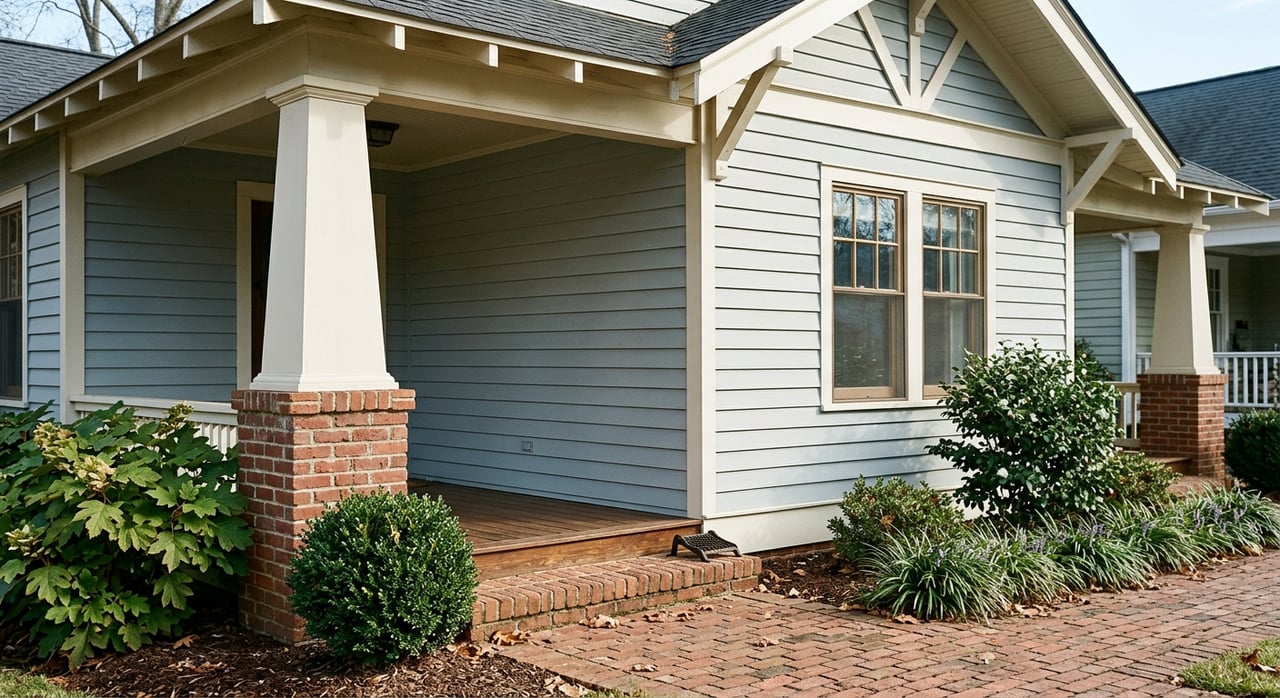
In Cleveland Street and Holloway Street, you may see a transition from Queen Anne details to Craftsman and Colonial Revival influences. Common features include decorative gables, wide cornices, deep overhangs, and porches with columns or post-on-pier supports.
In Morehead Hill, many primary structures were built before 1925. The district includes Chateauesque, Spanish Colonial Revival, Tudor Revival, Colonial Revival, Craftsman, Foursquare, and Queen Anne examples.
In Watts-Hillandale, there is no single dominant house style. The district includes traditional house forms with neo-classical details, along with notable institutional architecture such as Spanish Colonial Revival and Romanesque examples.
In Trinity Heights, the housing stock is described as predominantly Victorian, followed by Neoclassical or Neo-Colonial and Bungalow styles. Many homes are one to two stories and feature porches, gable or hip roofs, and dormers.
A home’s style can give you clues about its original floor plan, porch layout, roof shape, and construction details. That can be helpful when you start thinking about repairs, additions, or restoration work.
At the same time, older homes rarely stay exactly as they were built. Some Durham historic homes have seen window replacements, additions, converted floor plans, or exterior siding changes such as aluminum or vinyl. As a buyer, you want to know which parts of the home are original, which parts were changed, and whether future exterior work may need review.
If a home is in a local historic district or is a local landmark, Durham requires a Certificate of Appropriateness, or COA, before exterior changes begin. The city states that a COA is required before work starts and before a building permit is issued, even when no other permit is needed.
This review can apply to much more than large additions. Durham’s COA coverage can include new construction, restoration, alterations, walls and fences, paving, landscaping, above-ground utilities, lighting, signage, demolition, and moving a structure.
Routine maintenance that does not change appearance, design, or materials does not require a COA. That is an important distinction for buyers who may assume every repair needs approval.
Still, the line between maintenance and alteration is not always obvious when you are planning projects on an older home. If you are thinking about replacing windows, changing a porch, adding a deck, or altering exterior materials, it is smart to treat that as a pre-purchase question rather than a post-closing surprise.
Durham uses different review tracks depending on the scope of work. Minor COAs generally cover smaller modifications, landscaping and site work, rear decks, and other changes that do not significantly alter the property’s character.
Major COAs require a pre-submittal conference and are reviewed by the Historic Preservation Commission at monthly hearings. For buyers, that means renovation timing can be just as important as renovation cost.
If you are buying a property with major condition issues, demolition is not something to assume will move quickly. Durham notes that demolition of a local historic structure can be delayed for up to 365 days while alternatives are explored and the building is documented.
That matters if you are evaluating a heavily distressed property or planning a major redevelopment approach. Before you count on a teardown strategy, you need to understand whether local historic rules could affect your timeline.
Local historic landmarks come with a separate issue that buyers should know early. Durham states that landmark properties are taxed by the city and county based on 50% of appraised value, with the deferred amount acting as a lien.
If ownership transfers, the new owner must reapply for the tax deferral. If you are buying a designated landmark, this is worth confirming during due diligence so you understand both the potential benefit and the required next steps.
A historic-home inspection should go beyond cosmetic appeal. In Durham, a useful way to think about inspection priorities is to focus on the kinds of conditions that become serious in older buildings, especially structure and water management.
Durham’s demolition-by-neglect criteria highlight issues such as inadequate foundations and deterioration in floor supports, walls, ceilings, roofs, chimneys, and other structural supports. The city also points to conditions that make a building unsafe or not properly watertight.
When you buy a historic home in Durham, your inspection contingency should account for:
These items often affect both your immediate repair budget and your long-term ownership costs.
Lead is another important part of the historic-home conversation. In pre-1978 housing, renovations that disturb painted surfaces may require certified firms and lead-safe work practices under the EPA’s Renovation, Repair, and Painting rule.
Durham also adds a local plumbing-related caution. If you are a City of Durham water customer, your home was built before 1986, and you are concerned about lead in the home’s plumbing, the city says you can request lead testing.
For buyers, the practical takeaway is simple: older homes may need both paint-related and plumbing-related lead awareness. If a house has original or partly updated systems, it is wise to factor that into your inspection and renovation planning.
Historic-home budgets should go beyond paint colors and kitchen ideas. In Durham, older homes often need allowances for roof work, moisture management, window repair, electrical upgrades, plumbing, HVAC, masonry repair, porch work, and exterior projects that may require COA review.
It is also important not to assume every historic-looking house qualifies for tax incentives. Eligibility depends on the property’s designation and status.
If a house is individually listed in the National Register or is a contributing property in a National Register historic district, North Carolina’s current owner-occupied historic rehabilitation credit may help. The state says homeowners may receive a 15% credit for qualified rehabilitation expenses over $10,000 within a 24-month period, with a $150,000 expense cap and a $22,500 maximum credit.
The work must meet the Secretary of the Interior’s Standards, and the state advises owners to consult the State Historic Preservation Office before starting. A separate incentive structure is also described for income-producing historic properties.
Not every Durham historic property is automatically credit-eligible. The owner-occupied credit depends on National Register listing or contributing status within a National Register historic district.
That means you should verify eligibility before you count a tax credit into your renovation budget. This is one of the easiest places for buyers to make assumptions that do not hold up later.
Historic homes usually reward careful planning. A strong purchase process often includes an inspector, contractor, and, when needed, an architect who regularly work on older houses and understand preservation-related requirements.
Durham Planning and Development staff can help guide applicants through the COA process, and the North Carolina State Historic Preservation Office provides technical assistance for owners seeking rehabilitation tax credits. Even so, your private team matters. Experience with older homes can make a big difference in how smoothly your project moves from contract to closing to renovation.
If you are serious about buying a historic home in Durham, keep your process focused on four essentials:
Historic homes can offer lasting character, architectural detail, and a true sense of place. The key is making sure you fall in love with the home and understand the responsibilities that come with it.
If you want help evaluating historic neighborhoods, understanding local purchase considerations, or building a smart strategy for your next move in the Triangle, DuBois Property Group is here to help.
August 20, 2026
August 13, 2026
August 6, 2026
August 6, 2026
July 23, 2026

July 16, 2026
July 9, 2026
July 2, 2026
June 25, 2026
Whether buying, selling, or relocating to the Triangle area, DuBois Property Group is dedicated to providing personalized real estate services for buyers and sellers.